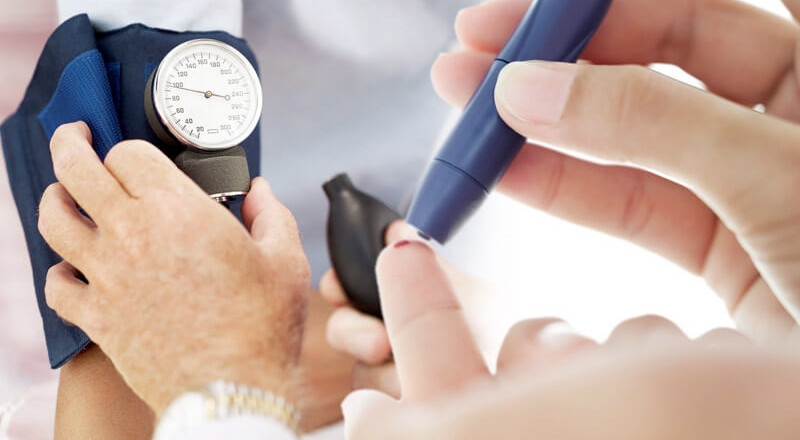
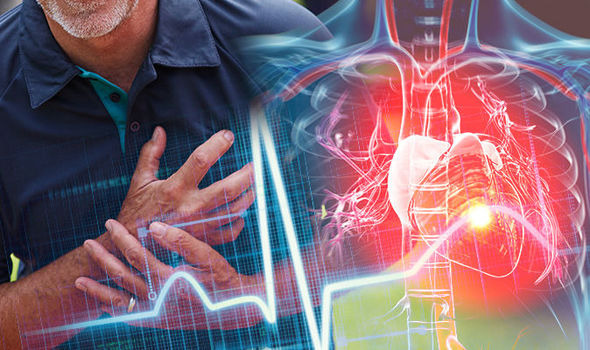
In SIMS Hospital, Medicine Department includes services for Diabetes and Blood Pressure, Heart Diseases Diagnosis, Brain disorders, Stomach Disorders, Arthritis, Asthma and Tuberculosis, Kidney problems, Weakness, Thyroid, Infectious Diseases, Disorders of the Lungs, Dengue, Malaria, Swine Flu, etc. We all work as a team to provide an unmatched quality of care and management to our indoor and outdoor patients.
Diabetes is a condition in which the amount of glucose (sugar) in your blood is too high because your body cannot use it properly.
There are two main types of diabetes:
About 25% of people with Type 1 diabetes and 80% of people with Type 2 diabetes have high blood pressure.
Having diabetes raises your risk of heart disease, stroke, kidney disease and other health problems. Having high blood pressure also raises this risk. If you have diabetes and high blood pressure together, this raises your risk of health problems even more.
If you have diabetes, your doctor will want to be sure that your blood pressure is very well controlled. This means that they will probably want your blood pressure to be below 130 over 80.
People with diabetes and high blood pressure are sometimes given the blood pressure medicines known as ACE inhibitors or angiotensin receptor blockers, because they are thought to help protect the kidneys. However, other blood pressure medicines can also be used.
The tests you'll need to diagnose your heart disease depend on what condition your doctor thinks you might have. No matter what type of heart disease you have, your doctor will likely perform a physical exam and ask about your personal and family medical history before doing any tests. Besides blood tests and a chest X-ray, tests to diagnose heart disease can include:
Electrocardiogram (ECG): An ECG records these electrical signals and can help your doctor detect irregularities in your heart's rhythm and structure. You may have an ECG while you're at rest or while exercising (stress electrocardiogram).
Holter monitoring: A Holter monitor is a portable device you wear to record a continuous ECG, usually for 24 to 72 hours. Holter monitoring is used to detect heart rhythm irregularities that aren't found during a regular ECG exam.
Echocardiogram: This noninvasive exam, which includes an ultrasound of your chest, shows detailed images of your heart's structure and function.
Stress test: This type of test involves raising your heart rate with exercise or medicine while performing heart tests and imaging to check how your heart responds.
Cardiac catheterization: In this test, a short tube (sheath) is inserted into a vein or artery in your leg (groin) or arm. A hollow, flexible and longer tube (guide catheter) is then inserted into the sheath. Aided by X-ray images on a monitor, your doctor threads the guide catheter through that artery until it reaches your heart.
The pressures in your heart chambers can be measured, and dye can be injected. The dye can be seen on an X-ray, which helps your doctor see the blood flow through your heart, blood vessels and valves to check for abnormalities.
Cardiac computerized tomography (CT) scan: This test is often used to check for heart problems. In a cardiac CT scan, you lie on a table inside a doughnut-shaped machine. An X-ray tube inside the machine rotates around your body and collects images of your heart and chest.
Cardiac magnetic resonance imaging (MRI): For this test, you lie on a table inside a long tube-like machine that produces a magnetic field. The magnetic field produces pictures to help your doctor evaluate your heart.

Your brain is your body’s control center. It’s part of the nervous system, which also includes the spinal cord and a large network of nerves and neurons. Together, the nervous system controls everything from your senses to the muscles throughout your body.
When your brain is damaged, it can affect many different things, including your memory, your sensation, and even your personality. Brain disorders include any conditions or disabilities that affect your brain. This includes conditions that are caused by:
This is a broad category of disorders, which vary greatly in symptoms and severity. Keep reading to learn about some of the largest categories of brain disorders.
Your stomach is an organ between your esophagus and small intestine. It is where digestion of protein begins. The stomach has three tasks. It stores swallowed food. It mixes the food with stomach acids. Then it sends the mixture on to the small intestine.
Most people have a problem with their stomach at one time or another. Indigestion and heartburn are common problems. You can relieve some stomach problems with over-the-counter medicines and lifestyle changes, such as avoiding fatty foods or eating more slowly. Other problems like peptic ulcers or GERD require medical attention.
Arthritis is the swelling and tenderness of one or more of your joints. The main symptoms of arthritis are joint pain and stiffness, which typically worsen with age. The most common types of arthritis are osteoarthritis and rheumatoid arthritis.
Osteoarthritis causes cartilage — the hard, slippery tissue that covers the ends of bones where they form a joint — to break down. Rheumatoid arthritis is a disease in which the immune system attacks the joints, beginning with the lining of joints.
Asthma is a condition in which your airways narrow and swells and produce extra mucus. This can make breathing difficult and trigger coughing, wheezing and shortness of breath.
For some people, asthma is a minor nuisance. For others, it can be a major problem that interferes with daily activities and may lead to a life-threatening asthma attack.
Tuberculosis (TB) is a potentially serious infectious disease that mainly affects your lungs. The bacteria that cause tuberculosis are spread from one person to another through tiny droplets released into the air via coughs and sneezes.
Once rare in developed countries, tuberculosis infections began increasing in 1985, partly because of the emergence of HIV, the virus that causes AIDS. HIV weakens a person's immune system so it can't fight the TB germs. In the United States, because of stronger control programs, tuberculosis began to decrease again in 1993, but remains a concern.
Kidney disease can affect your body’s ability to clean your blood, filter extra water out of your blood, and help control your blood pressure. It can also affect red blood cell production and vitamin D metabolism needed for bone health.
When your kidneys are damaged, waste products and fluid can build up in your body. That can cause swelling in your ankles, nausea, weakness, poor sleep, and shortness of breath. Without treatment, the damage can get worse and your kidneys may eventually stop working. That’s serious, and it can be life-threatening.
Weakness is a decrease in strength in one or more muscles. In the strictest sense, the medical definition of weakness refers to the loss of muscle strength, and this article is focused upon conditions that can result in a measurable loss of muscle function.
Weakness may be generalized or may affect one muscle or muscle group exclusively. Diseases of the neuromuscular system, injuries, metabolic diseases, and toxins can all cause of measurable muscle weakness.
Signs and symptoms of weakness can include trouble doing daily tasks, such as grooming or writing or problems with gait and loss of balance.
The thyroid is a butterfly-shaped gland that sits low on the front of the neck. Your thyroid lies below your Adam's apple, along the front of the windpipe. The thyroid has two side lobes, connected by a bridge (isthmus) in the middle. When the thyroid is its normal size, you can't feel it.
Brownish-red in color, the thyroid is rich with blood vessels. Nerves important for voice quality also pass through the thyroid.
The thyroid secretes several hormones, collectively called thyroid hormones. The main hormone is thyroxine, also called T4. Thyroid hormones act throughout the body, influencing metabolism, growth and development, and body temperature. During infancy and childhood, adequate thyroid hormone is crucial for brain development.
Your doctor may order lab work or imaging scans to help determine what’s causing your symptoms.
Many infectious diseases have similar signs and symptoms. Samples of body fluids can sometimes reveal evidence of the particular microbe that’s causing the illness. This helps the doctor tailor treatment.
Lung diseases are some of the most common medical conditions in the world. Tens of millions of people have lung disease in the world. Smoking, infections, and genetics are responsible for most lung diseases.
At SIMS Hospital, our pulmonology and chest specialists offer diagnostic bronchoscopy, pulmonary function testing, and specialized treatment regimens for chronic lung diseases.
Dengue and Malaria are mosquito-borne viral and parasitic infections that require rapid diagnosis, platelet tracking, and dedicated supportive fluid management.
Our 24/7 pathology and emergency inpatient units ensure quick fever profiling, monitoring of vital parameters, and round-the-clock intensive medical observation.
Swine flu (H1N1) is a respiratory infection caused by influenza viruses. Symptoms include fever, cough, sore throat, body aches, headache, chills, and fatigue. H1N1 flu is also known as swine flu. It’s called swine flu because in the past, the people who caught it had direct contact with pigs. That changed several years ago when a new virus emerged that spread among people who hadn’t been near pigs.
In 2009, H1N1 was spreading fast around the world, so the World Health Organization called it a pandemic. Since then, people have continued to get sick from swine flu, but not as many.